Announcements
Get free breathing and awareness practices, insights, and tips on my Facebook Public Figure Page
Widening the Embrace of Compassion
 During my walk this morning, and while talking by phone with my son, Benoit, I began to ponder the meaning of compassion. During our conversation the subject came up of the incredible gap that often occurs between how others see us and how we see ourselves. For example, sometimes people see us as “experts” in certain areas, and when they do the way they look at us and speak with us changes dramatically, often putting unconscious pressure on us to support that image. If we are honest, of course, we realize that whatever expertise we believe we may have or others may see in us has little to do with our actual being and with what we actually experience of ourselves. The fact is, except in very special conditions, we seldom see or tell the “whole truth” about ourselves either to ourselves or to others. How could we? We are seldom conscious of our own wholeness, including all the different, sometimes even contradictory, impulses, motivations, and manifestations of ourselves.
When I returned from my walk, I looked up one of my favorite Einstein quotes, which reminds us that “A human being is a part of the whole, called by us, ‘Universe,’ a part limited in time and space. He experiences himself, his thoughts and feelings as something separated from the rest–a kind of optical delusion of his consciousness. This delusion is a kind of prison for us, restricting us to our personal desires and to affection for a few persons nearest to us. Our task must be to free ourselves from this prison by widening our circle of compassion to embrace all living creatures and the whole of nature in its beauty. Nobody is able to achieve this completely, but the striving for such achievement is in itself a part of the liberation and a foundation for inner security.”
As I have pondered this passage over the years, I’ve realized that the practice of compassion begins at home, in our own hearts and minds and bodies. Before we can truly widen our circle of compassion to sincerely embrace others with our full presence, we need to widen the circle to embrace the whole of ourselves, to see and include all those aspects of ourselves that we have difficulty with, or don’t like, or even despise, along with the consciousness that makes everything possible.
When we are able to find this new, more-conscious way of embracing ourselves, when we wake up and realize that life itself is a miracle and a mystery, compassion toward others is a natural result. Fully present to the miracle of ourselves, how could we not feel great compassion toward “all living creatures” in the face of this beautiful mystery that we call life?
Copyright 2009 by Dennis Lewis
A Morning Walk Through Space and Time
I’ve just returned from my morning walk,
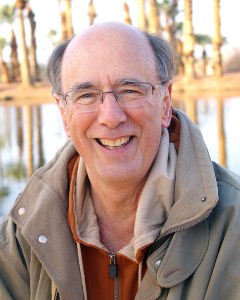
Dennis Lewis
a walk through space and time.
And as I walked a doorway opened
that revealed a world sublime.
Oh yes my thoughts they dwelled a while
on the pains and fears of mine.
And then I heard the songs of birds
which brought to me a smile.
As the smile opened I suddenly felt
all the walking I have done,
take place in the space of here and now
under the impartial sun.
And there I was with wholeness clear,
And here I am again,
being breathed by truth inside and out
no longer in fear of fear.
Copyright 2009 by Dennis Lewis
An Evening with Joan Baez
Dasha (my wife) and I went to hear Joan Baez sing last night at the Mesa Arts Center. A wonderful experience! The purity and beauty of her voice were still evident in every song she sang. As was her passion for a just world where we can all live in peace.
 Back in the 60s, her music touched me deeply, and it still does. As I listened last night, many of the feelings about life that I had in my 20s arose not just in a nostalgic way but also as a reminder of dimensions of myself that are not so clearly seen now, yet still part of my wholeness. In those early years of my adulthood, I took part in the massive “Ban the Bomb” demonstration in 1961 in Central Park in New York, went on a freedom ride and wound up in jail for three weeks (when I attempted to enter a restaurant with a black woman, a police officer pointed a shotgun gun inches from my face and told us to leave; we stayed and were arrested along with many other freedom riders who tried to enter other restaurants), demonstrated in Berkeley at the University of California, and, in general, felt the horror of the violent path our country was on. I saw clearly that our view of the world was not only narrow and self-serving but was “upside down” and that if any positive changes were to take place it meant that I myself would have to “be that change”–no easy task. I saw clearly that my life and the life of everyone else on the planet are inextricably linked, an insight that is still present in my consciousness.
Sometime in the mid 1980s, I introduced myself to Joan after a discussion event in San Francisco and spoke with her briefly about those years and what they meant and mean to our children. Though I don’t remember exactly when, I invited her later to come to an art show (the artists used computers to help them create their art) that I organized at my PR agency in San Francisco. Her mother wrote me back to tell me that Joan was unavailable but hoped that it was a great success. Wow! Of course, Joan did not remember me from our discussion, but her mother found the time to respond to my invitation nonetheless.
A great evening! One that still resonates in my mind, body, and heart.
A Qigong Morning
It is an amazingly beautiful morning here in Scottsdale, AZ. This morning, in an hour or so, I’ll be continuing to teach a friend Liangong in 18 Exercises, a wonderful qigong (chi kung) set taught to me in San Francisco many years ago by Dr. Wang Shan Long. My friend recently spent a couple of months teaching me Dragon & Tiger Qigong (from Bruce Frantzis, who I have taken many classes with over the years), so we are having a great exchange.
 Liangong in 18 Exercises was developed in China by qigong masters in conjunction with specialists in both Chinese and Western medicine. Liangong is based on qigong practices such as Tao-in, Eight Pieces of Brocade, Five Animal Exercises, and Muscle and Tendon Changing. It works systematically in 36 exercises (it was originally 18 exercises) with the muscles, tendons, ligaments, joints, and organs of the body to promote fitness and health. Liangong can help reduce stress, strengthen your immune system, promote cardiovascular and respiratory health, increase flexibility, reduce muscular pain, speed healing of soft tissue, increase mental clarity, and promote somatic awareness. These exercises can also help open up the various breathing spaces of the body. The exercise shown above is called “Pelvic Circles.”
Inattention On the Internet and In Our Lives
 One of the most unfortunate things about the Internet is the lack of attentiveness that many people demonstrate when “surfing” or when talking with one another on various Internet forums. Many of us are in such a hurry to get some information, accomplish some goal, or have people agree with our assumptions and viewpoints, that we often lose ourselves entirely in stress and anxiety or become so distracted by what’s next that we are unable to be present to what is right in front of us.
Inattention is rampant not only on the Internet but in almost every area of everyday life. Many of us move through our lives so quickly (which is reflected in our fast upper chest breathing), that any real connection with ourselves, our friends, our families, and our environments is next to impossible. Inattention in one person causes problems and wasted time not only for that person but also often for numerous others. For anyone who wishes to live a more intelligent, conscious, or spiritual life, the study of attention is crucial. Our attention is what connects us with the world in and around us. Without it, we are simply sleep walkers, experiencing little more than tiny fragments of ourselves, and out of touch with the energies and rhythms of wholeness and relationship.
If you feel called to do so, you can begin the study of attention right now, right here. Allow yourself to slow down enough while reading this so that you can be attentive to your posture and how you are breathing. Without any judgment or analysis, take a kind of inner snapshot of yourself and how you feel at this moment. Be sincere in your observations. Notice any unnecessary tension or nervousness in your body/mind. Are you tense, relaxed, angry, anxious, worried, in a hurry? Is your breathing narrow and constricted, or is it free and open? As you become more attentive to what is going on inside you, you may begin to hear a voice from your heart, or from some other more-central place in yourself, giving you a new, more-complete perspective on your situation. The voice may tell you to take your time reading and simply experience what is being said. Or it may even tell you to stop reading, get off the Internet, take a walk, and just breathe. Or it may tell you to sit quietly for a few minutes and ask yourself what is really important in your life. Whatever the voice has to say, the key is to listen, to pay attention.
As you try this work as often as possible over a period of days, weeks, and months, you will begin to understand what the great spiritual masters mean when they tell us that we live mostly in dreams, with little direct contact with reality. You will also begin to understand what they mean when they tell us that self-knowledge and self-transformation begin at the very moment that we sense and feel our inattentiveness in relation to the things we are doing. It is this experience, if we allow its significance to touch the various sides of our being, that can begin to awaken us and bring us into a more honest relationship with ourselves and others.
Copyright 2009 by Dennis Lewis
Propaganda in a Democracy
 When Edward Bernays, proclaimed by many as the father of public relations, published his book Propaganda in 1928, few people realized the far reaching influence that the new discipline of public relations would have on society. Propaganda, Bernays claims, is not something pernicious that one government or group inflicts on another, but is rather an integral part of democracy itself.
“The conscious and intelligent manipulation of the organized habits and opinions of the masses is an important element in democratic society,” said Bernays, who, perhaps appropriately, is the great grandson of Freud. “Those who manipulate this unseen mechanism of society constitute an invisible government which is the true ruling power of our country.”
Living in a so-called free market democracy, we are besieged with choices of all kinds in our daily lives—from the products and services we buy for home and business, to the activities that we undertake for entertainment and relaxation, to the politicians and government amendments we vote for, to the ideas that bring us motivation and meaning. Bernays points out that as citizens we have “voluntarily agreed to let an invisible government sift the data and high‑spot the outstanding issues so that our field of choice shall be narrowed to practical proportions.”
If this was true in in Bernays’ time, it is even truer today. The ever-growing influence of the mass media, combined with the ability of inexpensive powerful computer technology to manipulate huge databases of information and images and to communicate this data almost instantaneously worldwide, has spurred the move from a industrial society to an information society. There is simply no way that any one of us can keep up with and interpret all the information that is required for sound decisions in the many arenas of our lives. Whether we like it or not, we depend on the “special pleading,” the “propaganda,” the “public relations” of communications experts, mostly invisible, to bring to our attention the products, services, people, facts, and ideas that fit in best with our own specific social, psychological, political, and economic situations. These invisible experts, who include advertising and public relations professionals, newspaper editors, book publishers, movie producers, government officials, TV editors and anchormen, and so on thus have a tremendous influence in our lives.
Though most of us would agree—at least intellectually—that this is all obvious and true, we live our lives as though it were not. We assume, for the most part, that we are the masters of ourselves and that in issues of real importance we are able to discriminate between these outside influences and our real needs and beliefs—between hype and reality. Such an assumption is questionable, however, when we realize that from early childhood on, almost everything we eat, buy, use, or read has been shaped or packaged for us by a member of this invisible government.
The fact is, Bernays takes his ideas much further than many of us would like. He states that “We are governed, our minds our molded, our tastes formed, our ideas suggested, largely by men we have never heard of.” And he then proceeds in this and other books to lay out the formal mechanism by which propaganda can be used to meet the needs of a democratic society.
Propaganda, along with the special pleading it depends on, has been around since the beginning of time. But in the past—before the advent of the mass media—it was clear who was doing the pleading and for what purpose. Radio, television, newspapers, motion pictures, and lately computers have changed all that. Propaganda of one sort or another has become so much a part of our lives that we don’t even recognize it as such. As Lao Tzu said, “the best knots are tied without rope.”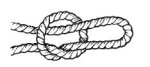
Of course, one could easily say that we in the west are better off than people living in communist countries or under dictatorships, because their propaganda is far more rigid and insidious than our own. This argument is a misleading one, however, for the simple reason that their propaganda is more visible and easier to perceive than our own. By its very nature, a democratic society offers so many choices to its citizens that we would have neither the time nor the energy to narrow them down without a whole industry of communications professionals dedicated to just that. Our propagandists do not use rope, barbed wire, mental hospitals, and the militia to make their point; no—they use the latest communication techniques disseminated through the print and electronic media in the guise of “giving us what we really want.”
What is truly pernicious about much of the propaganda that surrounds us in the west is the very “reasonableness” of it—the way in which we are taught to believe that it somehow represents our real needs. For the goal of a propagandist—no matter what his or her stripe—is to make a sale of some kind by seeking to convince us that they understand our inner or outer needs and goals and are responding to them. In this regard, a newspaper editor or TV anchorman trying to tell the news in a way that will attract readers or watchers is no better or worse than a public relations professional attempting to improve the public’s perception of a company or product.
What is important in either case is that we, the public, begin to understand this process better so that we begin to differentiate between what we really want and what we’ve been conditioned to want by the invisible government competing for our share of mind and money. Such a differentiation is an important step on the path of self-knowledge and in the struggle for inner freedom.
Copyright 1996-2009 by Dennis Lewis
Belly Breathing
Before we were born, our mother provided through our umbilical cord the nutrients, food, and oxygen that we needed to live. In many traditions, the area just below the navel and midway into the body is considered to be a sacred center of energy. In any event, our belly is one of the major areas that get tight and tense when we are under a lot of stress. And this greatly affects our internal organs, our breath, our energy, and our overall health. In this breathing exercise, we are going to work with “belly breathing” in order to open our belly and allow our diaphragm to move deeper down into our abdomen on inhalation and farther up to squeeze our lungs and support our heart on exhalation. This will have a powerful influence on our respiration, on the way we breathe in the many conditions of our lives. This practice is also described in my book Free Your Breath, Free Your Life. As you experiment with the practice, be sure, if possible, to exhale and inhale through your nose.
Practice
1. Lie down comfortably on your back on your bed or on a mat or carpeted floor. Position yourself with your feet flat on the floor and your knees bent (pointing upward). Simply follow your breathing for a minute or two with your attention. See if you can sense which parts of your body your breath touches.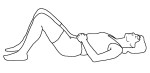
2. Continue to follow your breathing as you rub your hands together until they are very warm.
3. Put your hands (one on top of the other) on your belly, with the center of your lower hand touching your navel. Watch how your breathing responds.
4. You may notice that your belly wants to expand as you inhale and retract as you exhale. Let this happen, but don’t try to force it.
5. If your belly seems tight, rub your hands together again until they are warm and then massage your belly, especially right around the outside edge of your belly button. Notice how your belly begins to soften and relax.
6. Now rub your hands together again until they are warm and put them on your belly again. Watch how this influences your breath. Do not try to do anything. Simply watch and enjoy as your belly begins to come to life, expanding as you inhale and retracting as you exhale.
7. If your belly still seems overly tight and does not want to move as you breathe, press down with your hands on your belly as you exhale. Then as you inhale, gradually release the tension. Try this several times. Notice how your belly begins to open more on inhalation.
8. When you are ready to stop, be sure to sense your entire abdominal area, noting any special sensations of warmth, comfort, and energy. Spend a few minutes allowing these sensations to spread into all the cells of your belly all the way back to your spine.
This simple practice will have a highly beneficial affect on your breathing, especially if you do it on a regular basis. Remember that you can try this practice at any time of the day or night. Though it’s easiest if you are lying down, you can also do it sitting, standing, walking, and so on. It is an excellent practice to try before you get out of bed in the morning. It is also an excellent practice to work with whenever you are anxious or tense, since it will help relax you and center your energy. Over time, it will help slow down your breathing and make it more natural.
Copyright 1996-2009 by Dennis Lewis


 Harmonious Awakening