Announcements
Get free breathing and awareness practices, insights, and tips on my Facebook Public Figure Page
Join Me at the Breathwork Summit
 Breathing, whether we do it consciously or not, is our life force. A newborn takes her first breath. A dying man exhales for the last time. On each end of life, there is only breath.
And yet, caught up in our frantic schedules, work, family, and yes, even personal growth activities, so many of us forget to simply breathe.
When we do slow down and notice our breath, life changes. We get calmer, our minds clear, we feel more connected to ourselves, a higher power, and to the people we love. Many of us experience a deep sense of “oneness” that radiates out from within and into the world.
That’s why I’m excited to invite you to The Breathwork Summit – a FREE 4-day virtual event, January 31st – February 3rd, dedicated to harnessing the power of your breath for healing yourself and transforming our world.
I’ll be speaking at the Summit along with world-class breathwork pioneers such as Gay Hendricks, Stan Grof, Jack Kornfield, Sondra Ray, Leonard Orr, Dr. Dan Siegel and many other experts and visionaries.
Learn more and sign up for free here
Join us, learn to consciously breathe and experience these benefits in your life:
–Relieve stress and feel calmer in your mind and body
–Unblock and resolve painful, energy-draining emotions, trauma and conflicts
–Sharpen your mind
–Connect more strongly to your life force
–Increase your capacity for joy, peace and love
–Experience deep, permanent healing on a cellular level
–Open the door to becoming a more vibrant, loving, creative and responsible being – a true agent of change
P.S. When you learn to consciously breathe, you’re then able to show up more fully as a force for positive change in the world.
Join me for The Breathwork Summit and spread the word!
Co-Sponsors:
The Shift Network, The Shift Movie, MaestroConference, Transformations School of Integrative Psychology, International Breathwork Training Alliance.
Being Present to Yourself–Just as You Are

The Illumination of Presence
Daily Breathing and Awareness Practices, Insights, and Tips
Visit my Facebook author page and click LIKE to receive in your newsfeed daily practices, exercises, insights, and tips related to breathing, awareness, healing, awakening, and much more.
My Facebook author page now has more than 5500 fans.
I hope you will join us today!

Musings on Blaming and Responsibility
 Blaming assumes that people and things and situations “should” be different than they actually are. You can argue with reality all you want, but you can never win. What you can do is stop wasting your time and energy and attention imagining that things should have been different than they are, and, instead, if that is what you truly wish, do what you can right now to make them so.
So many people whine and whimper and defend themselves and their failures, blaming them on others and the situation instead of using their so-called failures to grow in understanding and being. Such people seldom find themselves in the right place at the right time. And they never will.
The ability to respond, to adapt, intelligently and effectively to often seemingly impossible conditions and odds, is part of the power and beauty of the human brain and nervous system, part of the mystery of the human spirit. This response-ability, however, has to be exercised if it is to be a vivifying factor in our lives. And if one doesn’t exercise it in small ways as often as possible it probably won’t manifest when we really need it in more important situations.
Here’s an example of what I mean by exercising it in small ways. The next time something small goes wrong in your life, instead of allowing yourself to be seduced by the first thought that arises (it must be someone else’s fault), see that thought for what it probably is–defensiveness, laziness, and habit–and look and question more deeply. Is my judgment actually true? Perhaps if I had left home on time and hadn’t had to rush I wouldn’t have been in the wrong place at the wrong time and had that car back into me when I was driving by (this actually happened to me). It doesn’t mean that the person who backed into me isn’t also responsible. What it does mean is that the situation most likely wouldn’t have happened had I been taking care of my own real business.
So much of what goes wrong in our lives happens because we aren’t looking and listening and sensing, we aren’t paying attention–we aren’t present. No blame here; just a simple reality for which each of us is ultimately responsible.
Copyright 2011, by Dennis Lewis. For daily practices, insights, inspiration, and much more come visit me on my Facebook Author Page. Be sure to click “Like” to receive my posts in your news feed.
Discovering New Dimensions of Space Within Your Body
 Can you discover new dimensions of space within your immediate physical, emotional, and mental experiences? This will require a deep level of awareness, a thawing of your conceptual framework, and a concomitant non-identification with the stories you tell yourself about who you and others are and what you are experiencing.
Begin with your breath. Sense yourself breathing the space of the atmosphere into the spaces of your body. This is a profound practice that may take a long time to fully understand, so work without willfulness and be patient.
And be sure to listen to the instructive and meditative interview of me by Tami Simon, founder of Sounds True. The interview (56 minutes), entitled “Breathing Space into Space,” is part of her “Insights at the Edge” series, “interviews with leading spiritual teachers and writers about their latest challenges–the ‘leading edge’ of their work.”
The interview (November 15, 2011) will help you understand the profound, practical nature of this practice.
Aerobic Exercise and the Importance of Nose Breathing
 When we refer to aerobic exercise, we refer to brisk walking, jogging, running, bicycling, dancing, and other physical exercises that cause a marked, but temporary, increase in respiration and heart rate. Many people doing aerobic exercise either breathe through their mouths the entire time or do so when they feel they need more air. Habitual mouth breathing is not a good idea, for reasons you will learn about below. So here is the first tip:
Inhale and Exhale Mainly through Your Nose: Whether you are doing aerobic exercises or not, it is best, if possible, to inhale and exhale through your nose as much as possible. Or, if you need to have a longer exhalation than is possible through your nose, you can exhale through pursed lips (as though you were blowing gently on something).
Why is it so important to inhale through your nose? There are several reasons for this. When we inhale through our nose, the hairs that line our nostrils filter out particles of dust and dirt that can be injurious to our lungs. If too many particles accumulate on the membranes of the nose, we automatically secret mucus to trap them or sneeze to expel them. The mucous membranes of our septum, which divides the nose into two cavities, further prepare the air for our lungs by warming and humidifying it. Over time, this filtering and humidification process helps protect our lungs from the damage that would otherwise occur.
Another very important reason for breathing through your nose–one that very few people are aware of–has to do with maintaining the correct balance of oxygen and carbon dioxide in your blood. When we breathe through our mouth we usually inhale and exhale air quickly in large volumes. Mouth breathing often leads to a kind of hyperventilation (breathing excessively fast for the actual conditions in which we find ourselves). It is important to recognize that it is the amount of carbon dioxide in our blood that generally regulates our breathing. Research has shown that if we release carbon dioxide too quickly, the arteries and vessels carrying blood to our cells constrict and the oxygen in our blood is unable to reach the cells in sufficient quantity. This includes the carotid arteries which carry blood (and oxygen) to the brain. The lack of sufficient oxygen going to the cells of the brain can turn on our sympathetic nervous system, our “fight or flight” response, and make us tense, anxious, irritable, and depressed. There are some researchers who believe that mouth breathing and the associated hyperventilation that it brings about can result in asthma, high blood pressure, heart disease, and many other medical problems. Some people, for instance, get exercise-induced asthma, a temporary condition in which one begins gasping for air. (These factors are discussed in more depth in The Tao of Natural Breathing, the three-CD set Natural Breathing, and Free Your Breath, Free Your Life.) Here is our second tip:
Don’t Let Yourself Become Breathless: When you work out aerobically, of course, the whole point is to find ways to get more health and fitness benefits from your workout. Here are some questions you might ask yourself. Would you like to burn more fat during your fitness workout? Would you like to reduce exercise-related fatigue and injury? Would you like to increase your endurance and stamina? Would you like your workout to help improve your breathing? If your answer is “yes” to any or all of these questions, and it no doubt is, then there is one simple thing you can do: don’t let yourself become “breathless” at any point during your workout. When you become breathless, you undermine your breathing coordination, burn sugar instead of fat for fuel, become tight and tense (which can promote injury), and, in general, undermine your endurance and stamina. Habitual mouth breathing can lead to a sense of breathlessness.
The simplest way to know whether you are exercising too intensely and becoming breathless is to try to speak several sentences out loud while you’re working out. If you can’t do it without gasping for air, then your workout is no longer “aerobic”–it is, or is about to become, “anaerobic,” which means that it is proceeding without oxygen and you are no longer burning fat for fuel. Another way to look at what has happened is that you are hyperventilating, which means that you won’t get oxygen where it needed in your brain and body and you will feel as though you are out of breath, even though you may have plenty of oxygen in your blood.
A good way to ensure that you are working out at a level that will not make you breathless is to inhale and exhale only through your nose. If you try this you will quickly discover, especially at the beginning, that you will have to work at a slower or less-intense rate during your workout. Gradually, however, your breathing coordination and blood chemistry will improve and you will be able to do more and progress more rapidly, eventually going well beyond your previous limits. You can also, if you wish, breathe out slowly through pursed lips, as I already mentioned.
Another way is to use your pulse rate as a guide. In his book The Portable Personal Trainer, Eric Harr suggests that we subtract our age from 180 to determine the upper limit of our pulse rate during exercise. The key is to stay below this number. He also suggests that we use a “heart-rate monitor” to ensure that we don’t go above this number. He does point out, however, that because of individual differences this number may not be accurate. So you will need to fine-tune your aerobic routine and your breathing to take into account your own situation.
When you become breathless, you are in the same situation, though only temporarily, as someone who has emphysema. In this situation, the diaphragm hardly moves at all and one tries to breathe by raising one’s shoulders (which takes weight off the top of the lungs and stimulates shallow breathing) and using one’s chest muscles, which is a very inefficient way to breathe, since the diaphragm is the main and most efficient breathing muscle
Copyright 2008-2011 by Dennis Lewis
The First Step in Healthy Breathing
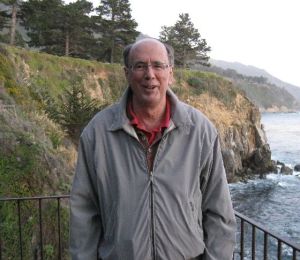
Dennis at Esalen in 2009
The first step in healthy breathing is to become conscious of how we actually breathe. From the perspective of the world’s great spiritual traditions, our breath not only brings needed oxygen and other gases to the physical body, but it can also bring, when we are conscious of it, the finer energies (prana, chi, and so on) needed to help nourish our higher bodies–the subtle body, causal body, and so on. Whatever we may believe about our soul and spirit, our breath, and how we breathe, is intimately connected with all aspects of our being.
In today’s noisy, high-stress world, many of us sit, stand, sleep, speak, act, and move in ways that undermine our breathing and our physical, emotional, and spiritual health. When we look at ourselves in action, when we actually sense and observe ourselves honestly for a moment, we see that we carry enormous amounts of unnecessary tension throughout our bodies. We may sense it in our hands, face, eyes, jaw, tongue, throat, belly, back, chest, and so on (even tension in our feet can undermine our breathing). These tensions can and often do impede the natural, harmonious movement of the diaphragm and its coordination with the secondary breathing muscles. They also impede the harmonious flow of the breath of life through our body/mind.
We can do all the breathing exercises in the world, but if we don’t begin to see and free ourselves from the unnecessary tensions that we carry day in and day out–if we are unable to find a state of dynamic relaxation in the midst of daily living–these exercises won’t do much good. In fact, without such relaxation and without real self-knowledge and self-awareness, breathing exercises can often exacerbate the tensions already present and create dangerous biochemical and physiological imbalances in our body/mind.
In beginning to study these unnecessary tensions in ourselves, which are generated in large part by our mostly unconscious attitudes toward ourselves and others, one of the most useful situations with which to begin is when we find ourselves in a hurry, which, for many of us, is almost all the time. Next time you catch yourself rushing through your life on the way some place other than where you are right now (and this can be a mental or emotional “rushing” as well as a physical one), sense your entire body and pay particular attention to your breathing. What does your breath feel like? Does it feel open and spacious? Most likely it feels small and cramped. Ask yourself if this is really how you want to live your life, always tensing toward something to be done or enjoyed (or something you believe will be better) in the future. Yes, the future is important and we all have plenty to do on its behalf, but what’s the point of all this “doing” if we don’t actually feel and appreciate the pure miracle of our aliveness, our being, right here and now? What’s the point of all of this activity if we are not open enough to receive and appreciate the life force flowing through us and others and the rich scale of impressions and perceptions that come with it?
It is only through a constant deep-felt appreciation of the value and miracle of being itself that our lives will take on real meaning, that our relationships with others will become imbued with intelligence and compassion, and that we will find effective solutions to the ever-growing problems we face. If we are constantly filled with unnecessary tension based on judgments about the past and expectations about the future, our breath will remain cramped and disharmonious, we will never discover what it means to be truly human, and our lives on this planet will only get worse no matter what brilliant strategies we devise or how much force and aggression we use to put them into action.
To see and release the unnecessary tensions that fill our lives, and to allow the breath of life to manifest fully through us and others, begins with sensing and observing ourselves at this very moment, paying special attention to the tensions that propel us through time, as well as the inner attitudes that fuel them. It begins with being present to “what is,” without any self-deception. This is the beginning of real transformation, both for ourselves personally and for the world. And it all begins with awareness of the breath.
A Safe, Powerful Breathing Exercise
One of the safest and most powerful breathing practices or exercises you can undertake is to consciously follow your breathing in the many changing circumstances of your life. As you inhale, simply be aware that you are inhaling. As you exhale, simply be aware that you are exhaling. Try this exercise for 10 minutes or so at a time at least three times a day. It will help free you from your automatic thoughts and emotional reactions and thus enable you to live with more receptivity and clarity in the present moment. You may find this exercise especially useful at moments when you are anxious or angry. With roots in Buddhism and the other great spiritual traditions, this is a wonderful practice for both beginners and advanced practitioners.
Copyright 2009-11 by Dennis Lewis
“Time is Breath”
Free Your Breath, Free your Life
G. I. Gurdjieff said that “time is breath.” And J. B. Priestly once described our time-starved situation as that of a knight who gets on his horse to go in search of time, not realizing that time is the horse he is riding. If time is indeed breath, and it is also the horse we are riding, then perhaps we can look toward our breath to discover a new, more conscious relationship to time in our lives.
For anyone who cares to look, it is certainly clear that the growing stress, anxiety, worry, and disharmony that many of us experience in this period of human history is closely associated with the fast, shallow upper-chest breathing that many of us experience in our daily lives, even when we are at rest. Such breathing is not just the result of chemical or mechanical imbalances in our body, but also stems from our increasing sensation and feeling of not having enough time and space in our lives. And this sensation comes in large part from our brain and nervous system, which is often in a state of emotional alarm. The truth is, as adaptable as we are as human beings, we are not designed for the kinds of chronically high-speed stressful lives that many of us live, and we pay a heavy price for it in terms of both our health and our happiness.
The Full Expanse of the Present Moment
If time is indeed breath, however, then there is an intelligent and healthy way out of this dilemma. The secret is in discovering a new inner attitude that can help us slow down our breathing and live in the full expanse and freedom of the present moment. Looking toward the future for some change in our lives without learning how to fully experience “the horse we are actually riding” is doomed to failure. Pushing ourselves into the future, as many of us do under the influence of our latest high-speed information technologies, undermines the rhythms and wisdom of the human organism and suffocates our breath and our life.
To open ourselves to our own inherent rhythms and wisdom, we must learn to experience through direct awareness the terrible effects that our time-conditioned life has on our health, well-being, and perception, and we must learn to open the breathing spaces of the body and find our own unconditioned breath—a breath that will most certainly reveal itself as longer and slower than our usual breath, which is now held captive to the stress-producing emotions of fear, anger, anxiety, and worry.
What is needed to help bring this about is not just work with breathing (though this is certainly necessary), but also a radical change of perception—the conscious, heartfelt experience of love, kindness, nonjudgment, and compassion, both toward ourselves and others. These feelings, which act as antidotes to the poisonous time-eating emotions that many of us experience day in and day out, can help harmonize our nervous system and bring our attention into the miracle of the present moment. They represent the felt appreciation for what exists here and now both in ourselves and others.
Copyright 2004-2011 by Dennis Lewis. This entire passage is from my book Free Your Breath, Free Your Life.
Cherry Picking Qigong
 If you don’t happen to have a cherry tree nearby, imagine yourself standing beneath one. Take off your shoes and physically stand up and sense your feet on the ground and the earth fully supporting you. If possible, find a patch of earth or grass nearby where you can stand barefoot. Sense how you are breathing. Don’t try to alter your breath in any way. Just let it be exactly as it is.
Sensing your feet touching the earth, look and stretch upward first with one hand and then the other to pick the imaginary cherries and then look and bend downward to put them in a bucket at your feet. Inhale through your nose as you stretch upward; exhale through your nose as you reach down to put the cherries away. Remember to close your fingers around the cherries when you are picking them and to open your fingers when you release the cherries into the bucket. Keep your hands relaxed so that you don’t crush the cherries. And be sure to take your time finding a comfortable rhythm. Really sense, feel, and enjoy what’s happening in your entire body.
I’ve done this simple qigong practice over the years. It is a good practice to do when you feel lethargic and out of sorts, or when you’ve been sitting too long at your computer, or just sitting too long. If you do this simple practice with full attention, it will help open up the breathing spaces of your body and get you sensing and breathing again. It will get your energy moving and help you feel more alive and alert. It will help you become more present to yourself.
Copyright 2011-14 by Dennis Lewis
Some Impressions on Words, Voice, Listening, and Silence

Impressions for an inner and outer study
The human voice is composed of a fundamental tone and various harmonics, depending on who is speaking and the various existing physical, emotional, mental, and even spiritual conditions. The voice rides on the waves of the breath, which is also conditioned by many factors. When I truly listen to myself as I speak, a miracle occurs: I experience how my voice manifests “who I am” at that moment.
It is important, however, to listen not just to the words themselves, but also to their source and how they vibrate in the body/mind. For instance, do the words arise from a silent, unknown place in myself or from other words (like the billiard balls of Newtonian physics)? It makes all the difference.
When words proceed from other words, they proceed associatively, with no time or space encompassing and penetrating them. The entire process becomes mechanical. This word by you evokes that word by another which then evokes another word by you and so on.
When you listen to an argument between people you will notice this principle in action–sometimes people are even saying the same thing but don’t realize it because the words are just bouncing horizontally off of one another with no vertical sense of real meaning. Or, on the contrary, people can think they are agreeing when they actually disagree quite radically. No one is really listening. Buttons are simply being pushed and words move back and forth interactively by momentum. But when we pause and listen, when we stop inwardly, we have an opportunity to sense and feel the silence again and understand better what it is we wish to say, and what the other is actually saying.
In his book The World of Silence (published in 1948), Max Picard writes: “Words that merely come from other words are hard and aggressive. Such words are also lonely, and a great part of the melancholy in the world today is due to the fact that man has made words lonely by separating them from silence.”
As I mentioned, words have horizontal and vertical aspects. The “horizontal” represents the associative action of the words, the way in which they touch and stimulate one another, much the same way that a billiard ball hits another, which hits another, and so on, on the flat surface of a billiard table. The “vertical” represents the depths from which words arise, and the meaning they carry as a result of that depth.
When words arise from that deeper, more spacious place, we may use the words incorrectly (as far as the dictionary is concerned) but what is being said is understood in and through the silence, however confused the mind might be. The fundamental tone and the harmonics are not just heard but also felt and sensed. Resistance to listening dissolves into silence and an embodied sense of life and meaning.
This essay is based on a conversation I had with friends on my Facebook Authors Page.
Copyright 2011, by Dennis Lewis


 Harmonious Awakening